Research Article > DOI
Arnas Majumder  , Monica Valdes , Mariangela Albano , Patrizia Serra , Filippo Schintu, Flavio Stochino
2026 | Volume 1 | e003
Received: 2 February 2026 | Revised: 9 March 2026 | Accepted: 27 March 2026 | Published: 29 April 2026
Abstract
This study investigates the physical, mechanical, and thermal properties of cement-stabilised unfired earth bricks. Cement-stabilised earth bricks were fabricated using soil from Sidi Amor, Tunisia, and 3% cement by dry weight with respect to the soil dry mass. The bricks exhibited apparent dry densities ranging from 1687 to 1853 kg/m³. Whereas moderate capillary water absorption coefficients were found between 9.4 and 23.9 g/m²·s, these results confirm that these bricks exhibit the typical characteristics of lightly stabilised earthen materials. Ultrasonic pulse velocity values (ranging from 1175 to 1670 m/s) indicate satisfactory material continuity. While moderate surface hardness has been confirmed through rebound hammer tests. Flexural strengths of 0.66 to 0.98 MPa and compressive strengths between 1.7 and 8.6 MPa have been obtained through mechanical tests. These brick samples have shown good insulation properties; the thermal conductivity values increase with increasing sample temperature, measuring 0.435, 0.446, and 0.462 W/m·K at 10 °C, 20 °C, and 30 °C, respectively. Overall, the results confirm that cement-stabilised unfired earth brick is a promising candidate as a sustainable masonry in low-rise and non-load-bearing construction.
Keywords
unfired earth brick, cement-stabilised brick, sustainability, integrated property
How to Cite: Majumder A, Valdes M, Albano M, Serra P, Schintu F, Stochino F. Physical and thermomechanical performance of cement-stabilised unfired earth bricks. Resilience and Reuse in the Built Environment. 2026; 1:e003.
Download .RIS Download .BibTeX
Link: doi
Introduction
The construction sector faces growing obligations to minimise the environmental impacts of traditional construction materials, such as fired clay bricks and cement products, through reduced energy demand and greenhouse gas emissions during their manufacturing processes [1,2]. In the civil engineering sector, there has been a revived quest for innovative, greener, sustainable masonry construction material alternatives that can minimise the carbon footprint and energy use, while maintaining acceptable mechanical properties, durability, and thermal resistance. Among these new material options, earth-based construction materials [3–7] offer a potential approach to sustainable construction due to their inherently low energy demand during manufacturing and compatibility with sustainable construction techniques [8–10]. Earth-based building materials can be categorised based on their structural load-bearing [11] and non-structural, such as insulation, thermal, or acoustic purposes [12] usage. Unfired earth bricks are regarded as traditional masonry units, but in engineering construction, their suitability in terms of strength can be limited due to low strength [13], inhomogeneous distribution properties [14], and moisture sensitivity [15].
In this case, the introduction of cement-stabilisation [16–19] has been identified as a successful remedy for enhancing strength, cohesiveness, and durability. Therefore, cement-stabilised earth bricks meet the minimum acceptable requirements for construction performance in low-rise buildings and non-load-bearing structures [17,20,21]. Some examples of natural fibre-cement-stabilised earthen brick are also available in the literature, such as sisal fibre [22] and areca fibre [23].
However, for stabilised earth bricks, the engineering characteristics are highly sensitive to soil properties [24], additive content [25], compaction techniques, and curing conditions [20], which may introduce considerable variability in performance. Further, careful control of mixing water is essential to achieve effective compaction during sample preparation.
From a civil engineering perspective, a comprehensive experimental characterisation is essential for evaluating the reliability and practical application of stabilised earth bricks, as well as assessing their suitability for use in masonry structures. Therefore, besides the commonly required mechanical properties, other evaluation methods, particularly non-destructive tests such as the ultrasonic pulse-velocity test [26] and the rebound number test [27], can be used to study the homogeneity of the material and its relationships with related strength properties.
In [28], the authors have incorporated small amounts of cement into adobe, and this addition has been observed to promote the formation of calcium silicate hydrate (CSH), which enhances the internal structure by linking soil particles and reducing pore size. Notably, the mechanical and durability properties of the adobe improved significantly. The compressive strength increased to above 2 MPa. The flexural strength increased to 1–1.5 MPa. Moreover, the erosion mass loss of the cement-stabilised adobes decreased from approximately 9% for the raw adobes to nearly 1%, showing better water resistance. The stabilised adobes have a good thermal conductivity of 0.8–1.2 W/m·K. The above findings show that the adobes stabilised with 2–4 wt% cement have good strength, durability, and thermal performance for building purposes. In [29], the authors have indicated that the addition of cement to adobe increases the formation of calcium silicate hydrate, which increases the strength of adobe by bonding the particles of the soil and reducing the pore size. According to the findings of the study, the compressive strength increases with the addition of cement to adobe, ranging from 7 to 9 MPa depending on the bulk density, which ranges from 1.5 to 2.1 g/cm³. The thermal conductivity of adobe ranges from 0.53 to 0.94 W/(m·K) depending on the bulk density.
In [30], the results indicate that the addition of cement significantly improves the performance of compressed earth bricks (CEB). The compressive strength increased with higher cement content and curing time. After 28 days of curing time, the maximum compressive strength of 4.42 N/mm² is attained at 8% cement content for the Bosso soil, 2.67 N/mm² for the Damashi soil at 6% cement content, and 2.82 N/mm² for the Plateau soils at 6% cement content. Water absorption also decreased with increasing cement content, reducing from approximately 14.7–19.7% (depending on soil source) at 0% cement to about 8.1–11.7% at 8% cement, which satisfies the 12% maximum recommended limit. In addition, the density of the bricks ranged between 1600 and 1800 kg/m³, and higher density corresponded with improved compressive strength. These findings confirm that cement-stabilised compressed earth bricks are suitable for sustainable housing construction.
In [31], it has been reported that cement stabilisation has a significant impact on the hygrothermal behaviour of compressed earth bricks. From the results, it is clear that the thermal conductivity of the compressed earth bricks increases with the percentage of cement. This is evident from the results, where the thermal conductivity increases from 0.798 W/(m·K) for unstabilised bricks to 1.10 W/(m·K) for bricks containing 12% cement. However, the capacity of the earth bricks to absorb moisture is reduced upon stabilisation. At a relative humidity of 97%, the moisture content decreases from 5.69% for unstabilised bricks to 4.40%, 3.76%, and 3.70% for bricks containing 8%, 10%, and 12% cement, respectively. In [32], the authors have investigated the mechanical, thermal, and hygroscopic properties of compressed stabilised earth bricks produced by artisanal brickworks in Senegal. The results showed that the compressive strength ranged from 1.3 to 3.3 MPa, indicating that some bricks are suitable for non-load-bearing walls. The thermal conductivity varied between 0.66 and 0.85 W/m·K, with an average value of 0.75 W/m·K, while the average specific heat was about 1040 J/kg·K. In addition, the water vapour permeability ranged from 2.5 to 2.9 × 10⁻¹¹ kg·m⁻¹·s⁻¹·Pa⁻¹, showing that the bricks can regulate indoor humidity. While in [33], the authors examined the mechanical and thermal properties of cement-stabilised compressed earth bricks with different proportions of materials. The compressive strength of the bricks ranged from 15.19 to 20.06 MPa, depending on the composition of the materials. The compressive strength of the bricks decreases as the water-binder (cement) ratio increases. The thermal conductivity of the bricks ranged from 0.231 to 0.734 W/(m·K). In [34], the authors studied the compressive strength of compressed earth bricks stabilised with 5% cement content and different percentages of polyvinyl alcohol. The study showed that the bricks containing 5% polyvinyl alcohol content gave the best results. The compressive strength of the bricks was approximately 9.96 MPa, while the water absorption capacity was reduced to 11.76%. This can be explained by the presence of calcium silicate and hydrated calcium formed in the bricks.
The main objectives of this research are to experimentally identify the physical, mechanical, and thermal properties of the cement-stabilised unfired earth bricks and to present a detailed understanding of the performance of the unfired earth bricks. Furthermore, the research aims to evaluate the homogeneity of the materials used to construct the bricks through the adoption of non-destructive testing. Finally, the research aims to evaluate the potential of the usage of the cement-stabilised unfired earth bricks as a sustainable construction material.
The novelty of this work lies in the comprehensive experimental characterisation of cement-stabilised unfired earth bricks through an integrated multi-parameter approach. In particular, the study combines non-destructive testing techniques: namely, ultrasonic pulse velocity and rebound hammer tests, with conventional mechanical and thermal characterisation to provide a more complete assessment of material performance. Furthermore, the thermal conductivity of the bricks is investigated at multiple temperatures, allowing for a better understanding of their thermal behaviour under varying environmental conditions. An additional contribution of this research is the use of locally available Tunisian soil, which enables the evaluation of the feasibility of producing sustainable and regionally sourced masonry units, thereby supporting environmentally responsible construction practices.
The current research focuses on analysing the physical, mechanical (non-destructive and destructive tests), and thermal properties of cement-stabilised unfired earth bricks (fabricated from soil extracted from Sidi Amor, Tunisia). Experimental tests have been conducted at the Material Testing Laboratory of the University of Cagliari, including density and water absorption tests, ultrasonic pulse-velocity and rebound-number tests, flexural and compression strength tests, and thermal conductivity.
Materials and Methods
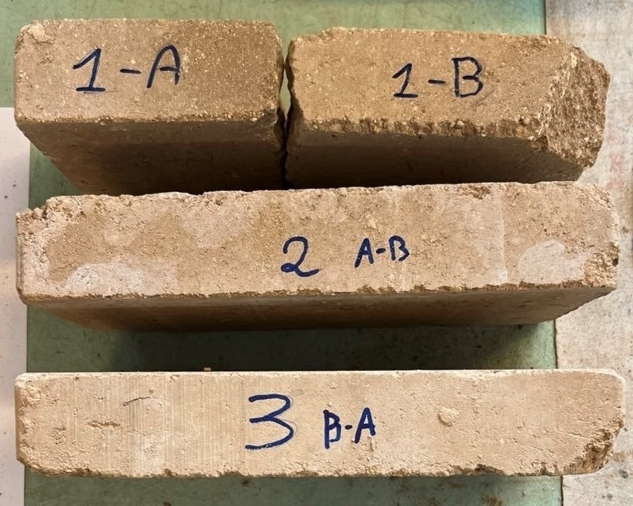
This work presents the results of an experimental campaign carried out at the Material Testing Laboratory of the University of Cagliari, Italy. The primary objective was to evaluate the physical, mechanical, and thermal performance of cement-stabilised unfired earth bricks (Figure 1) originating from SIDI AMOR, Tunisia.
The objective is to use this cement-stabilised unfired earth brick as an alternative construction material and further compare it with the requirements for its use in building construction. Unfired earth bricks were manufactured using a cement-stabilised soil mixture containing 3% cement by weight, see Table 1. This dosage was chosen as a low stabilisation level that is commonly used in earth construction to enhance its mechanical strength and durability while retaining the environmental benefits of earth materials. Past research indicates that cement stabilisation levels normally vary between 3% and 10% by weight, depending on the soil type and the required performance.
Table 1. Young’s Modulus values corresponding to pre-compression stresses [8].

The soil was collected from a local quarry in Sidi Amor, Tunisia. It represents a locally available earth material commonly used in traditional construction, making it relevant for evaluating sustainable building materials based on local resources.
Before use, the soil was crushed and subjected to a sieving procedure in order to remove coarse particles and impurities and to obtain a more homogeneous material suitable for brick production. The soil was passed through a 2 mm mesh sieve to eliminate gravel and larger aggregates. After sieving, the soil was thoroughly mixed with Portland cement in dry conditions to ensure a uniform distribution of the stabiliser within the mixture. Subsequently, slowly water was added to prepare the mixture. Subsequently, water corresponding to 14% (based on the mixing trial) of the total dry mass of the soil–cement mixture was gradually added while mixing until a workable consistency was achieved.
The mixture was placed into moulds and manually compacted in successive layers to obtain a dense and homogeneous structure before demolding. This process of multiple compaction assists in the minimisation of voids as well as the interlocking of the particles in the soil-cement matrix. After the moulding of the bricks, the bricks were removed from the mould and cured under controlled conditions (20 °C and 50% of relative humidity) in the laboratory to allow for proper hydration of the cement in the bricks.
For the curing period, the choice of 28 days was based on the general practice for cement-based materials to achieve adequate hydration and stability of the mechanical properties. This period allows the cement binder to achieve its bonding effect within the soil particles and provides a reference point for comparison with the results reported in the literature.
This low level of cement stabilisation increases the mechanical strength and durability of the bricks while maintaining the environmental benefits of raw earth construction[35-36]. This improvement in the mechanical strength and durability of the bricks occurs due to the improvement in the bonds between the particles of the soil and the reduced porosity of the soil. Adding a small amount of cement increases the bonds between the particles of the soil. As a result, the compressive strength of the soil increases. Adding a small amount of cement also increases the durability of the soil by reducing the amount of water absorbed by the soil. Specifically, the reduced water absorption increases the durability of the soil significantly [37]. Since cement is kept to a minimum, the bricks are still largely made of natural soil, thus retaining the advantages of raw earth construction in terms of energy consumption and CO₂ emission savings compared to conventional building materials [38].
A total of three cement-stabilised brick samples were prepared, of which one was broken into two halves during transportation. Notably, the broken samples were considered as two different samples. The samples were labelled as follows: 1A, 1B, 2, 3 (Figure 1).
Indeed, the experimental campaign was conducted on a limited number of samples (three bricks, with one specimen fractured during transportation). The primary objective of this study was to perform a preliminary characterisation of the physical, mechanical, and thermal behaviour of cement-stabilised unfired earth bricks produced from the selected soil.
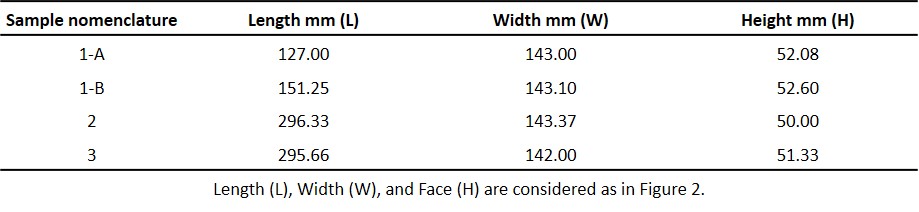
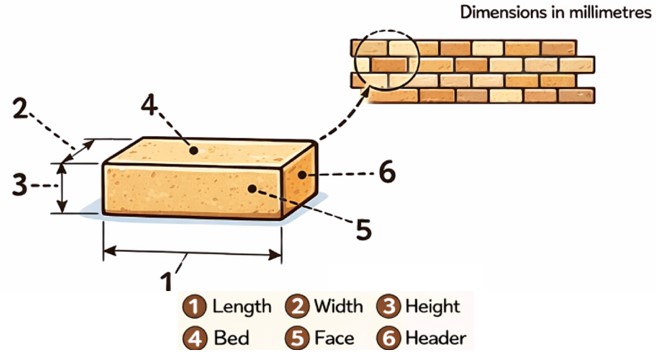
Table 2 presents the mean dimensions Length (L), Width (W), and Height (H) of each sample, according to the nomenclature of Fig. 2. To accurately represent this variability and obtain reliable averages, four measurements were performed for each side of each sample.
Table 2. Samples dimensions.
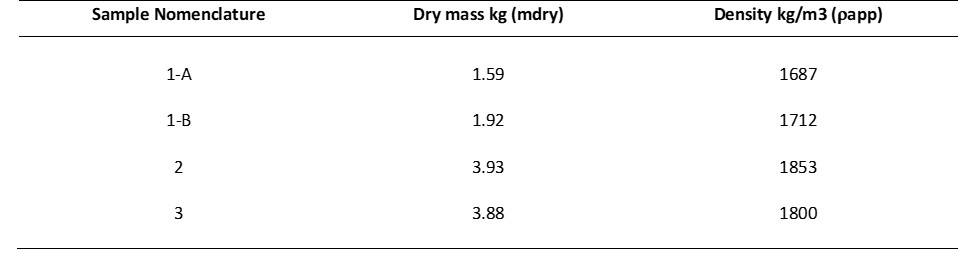
On the 28th day of curing, the samples were wrapped with air-bubbled packing plastic and transported from Tunisia to Cagliari, Italy, in checked-in baggage. Upon arrival on the 31st day from the date of casting, the samples were measured, weighed, and then dried in a ventilated oven to constant mass at a temperature of 50 °C. The dry mass (mdry) was recorded. The apparent density (rapp) was calculated by dividing each sample’s dry mass by its measured volume, as summarised in Table 3.
Table 3. Samples after oven drying.
First, the thermal conductivity tests of all samples were performed. Thereafter, capillarity tests were performed, followed by non-destructive (ultrasonic and Rebound Hammer Test) and destructive (compression test) tests.
Thermal conductivity tests
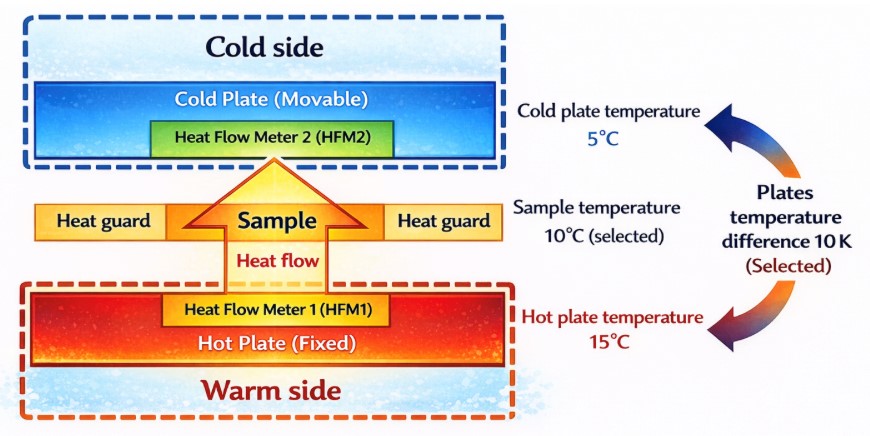
The thermal properties of the earth brick samples were measured using a heat flow meter in accordance with ISO 8301 [40] and EN 1946-3 [41], employing a TAURUS TCA 300 device (hereafter referred to as TAURUS).
Each sample underwent thermal conductivity measurement after 28 days of natural drying, followed by oven-drying. The samples were then oven-dried at 50 °C, following EN 12667 [42], to remove residual moisture, as humidity increases thermal conductivity. Oven drying lasted between 3 and 4 days, depending on moisture content, and sample mass was monitored daily until a constant weight (±0.1 g) was achieved. Once stabilised, the samples were stored in airtight bags and removed only immediately before testing. Sample masses were measured before and after each test under controlled laboratory conditions (25 ± 3 °C, 60 ± 10% RH).
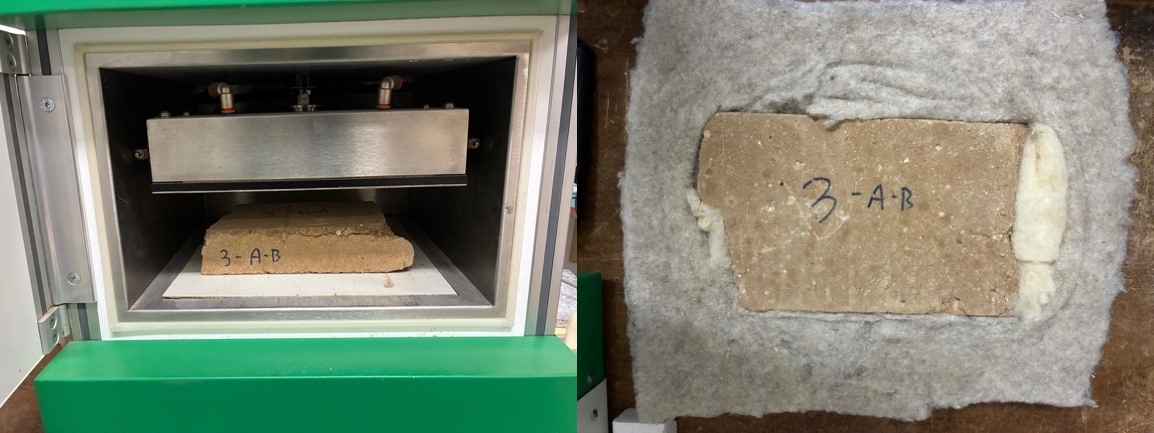
The TAURUS apparatus consists of hot and cold plates with a total area of 300 × 300 mm² and an active measurement zone of 100 × 100 mm² at the centre of each plate (Figure 4.a). Thermal conductivity was recorded every minute over a total duration of 300 minutes. Mean sample temperatures of 10 °C, 20 °C, and 30 °C were used with a fixed plate temperature difference of 10 °C, in accordance with EN 12939 [43]. All samples measured 160 × 140 mm² in surface area with a thickness of 40 mm. Since these dimensions exceeded the active zone, a wool insulating ring was placed around each specimen to minimise edge heat losses and ensure uniform heat flow. Sheep wool was selected as a heat guard (Figure 4.b) for its low thermal conductivity (~0.0378 W/m K). Thermal conductivity (λ) was calculated using eq. (3):

where
is the heat flux (W/m²), is the sample thickness (m), is the hot plate temperature (°C), is the cold plate temperature (°C).
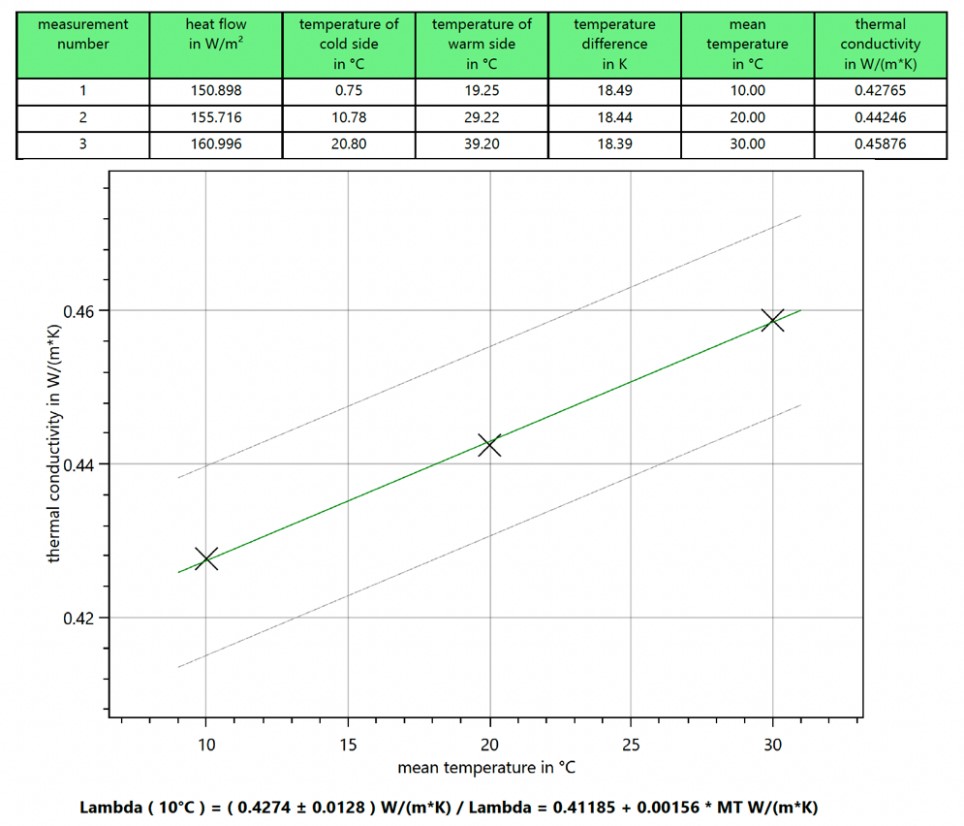
Based on the measurements, the heat flow meter provides a thermal conductivity vs. sample mean temperature curve (Figure 5).
Water absorption due to capillarity
The water-absorption capacity of each brick specimen was calculated in accordance with EN 772-11 [44]. The specimens were placed in a container on a supporting device so that they were clear of the base of the container and then immersed in water (Figure 6) to a depth of 5 (±1) mm for a time (ts,0 ) of about 10 (±2) minutes, as specified in EN 771-5 [39].
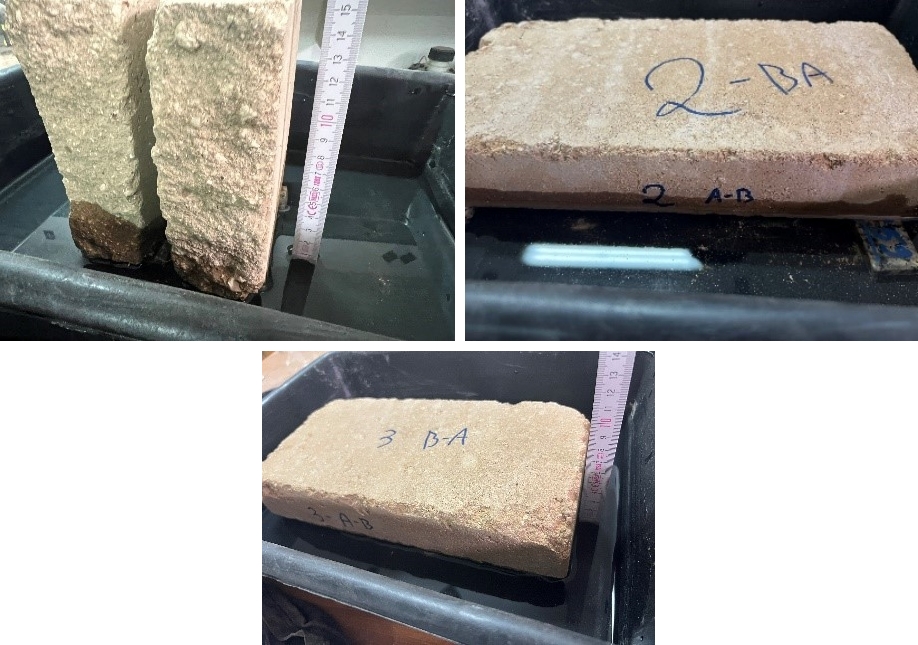
The two broken parts (1A and 1B) of specimen 1 were tested on the header face (see Figure 6.a). Two specimens (samples 2 and 3) were tested on the bed face, see Figure 6.b and Figure 6.c. The water level was maintained constant, and the faces remained in contact with water throughout the test. After the scheduled immersion time, the samples were removed from the water, swiped to remove surface water, and their mass was measured. The water absorption coefficient due to capillarity (Cw,s) was determined using the following Equation 1 [44]:

where
ms0,s (g) is the mass of the specimen after capillary absorption
is the oven-dry mass
ts,0 (s) is the test duration
As (mm2) is the gross area of the face immersed in the water.
Non-destructive Tests
Ultrasonic Testing (UT) and Rebound Hammer Test (RH) were conducted on the selected specimens to detect discontinuities, cracks, or variations in material properties without causing any alteration to the sample structure.
Ultrasonic Test
Ultrasonic measurements were carried out using the Pundit Lab+ ultrasonic testing device, developed by PROCEQ. The equipment consists of two standard transducers with a nominal frequency of 54 kHz, used for signal emission and reception, respectively. It has a central unit for signal generation, data acquisition, and preliminary analysis. For each specimen, at least three measurements of the ultrasonic transit time were performed along a defined path length to ensure repeatability. Two different transmission paths were considered: along the specimen Width (W) and the Height (H) (Figure 7). The UPV method is used here as a non-destructive technique to assess material continuity and internal homogeneity, rather than as a direct predictor of compressive strength.
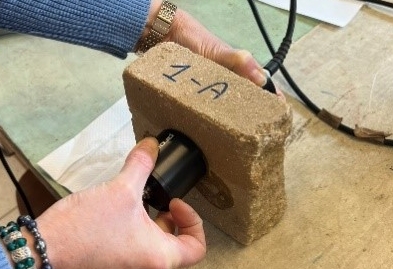
The ultrasonic velocity (UV) for each specimen was calculated as the ratio of the transmission path length (which has been measured from the centre of the emitting transducer to the centre of the receiving transducer) to the average measured transit time. For a homogeneous and isotropic material, the ultrasonic velocity (V) can be calculated using Equation (2), [45]:

where
E is the dynamic modulus of elasticity;
r is the density
m is the Poisson ratio. An estimated Poisson ratio =0,2 has been adopted [46].
Thus, the Ultrasonic Velocity is related to the elastic properties and mass of the medium, which means that if mass and V are known, its elastic properties can be assessed, and the Dynamic Modulus of Elasticity can be derived [47].
Moreover, the analysis of V provides crucial information about the inner conditions of the object, since it is empirically known that the better the physical and mechanical quality of the object, the higher the velocity.
Rebound Hammer Test
A Schmidt Pendulum hammer (manufactured by PROCEQ) was used to test the surface hardness of adobe bricks. The sclerometric tests were conducted on two brick surfaces, on the Bed (B) and Face (F) faces (see Figure 8).
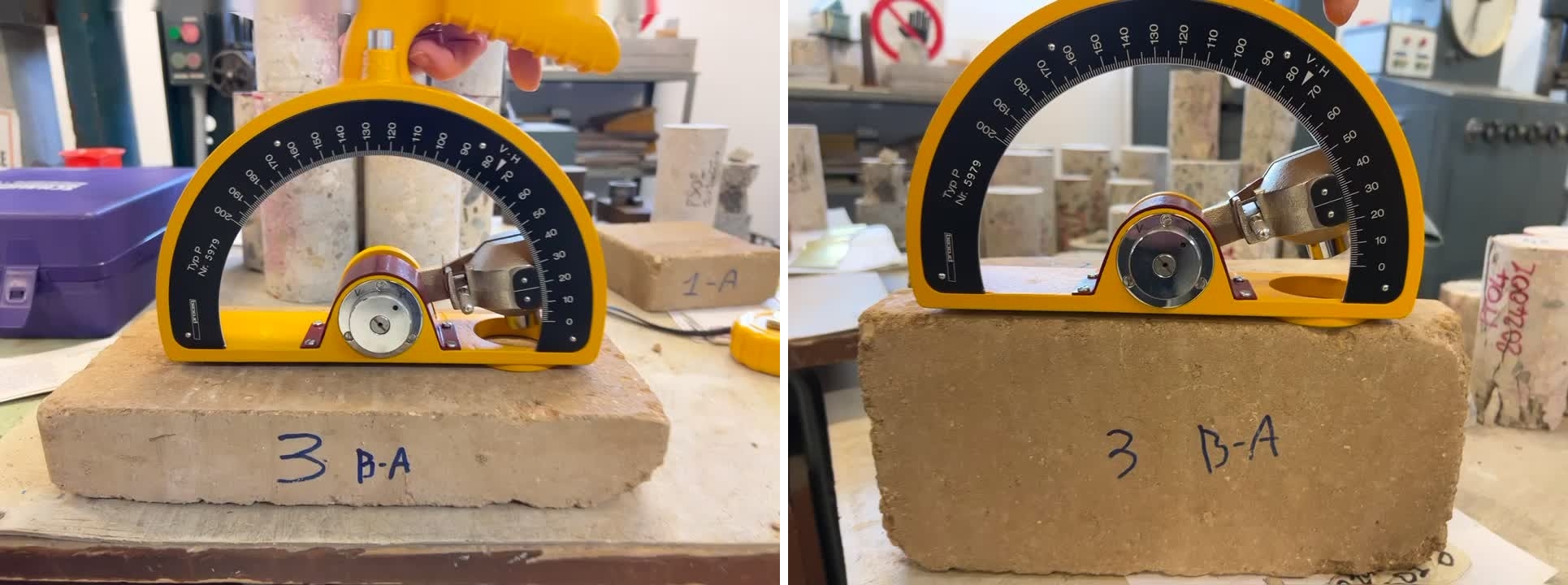
This is a low-energy rebound device, and it has been specifically designed to accurately test soft materials with compression resistance below 5 MPa [33-34].
When the plunger impacts the surface, an internal mass rebounds, and the rebound distance is measured on a graduated scale as the “Rebound Number.” This nondimensional value represents a material’s surface hardness index, which could be empirically correlated with its compressive strength. Higher rebound numbers generally correspond to greater hardness and strength, whereas lower values indicate weaker materials. However, results are affected by factors such as surface condition, moisture content, and aggregate type, necessitating specific calibration to ensure accuracy [48,49]. The Impact Energy associated with this hammer model is 0.833 Nm [49-50]. Due to the sample dimensions, only two measurements could be taken on each side of the selected face, yielding a total of four measurements per sample. Moreover, due to the small dimensions, tests on samples 1-A and 1-B could have been performed only on the bed face.
Mechanical destructive tests
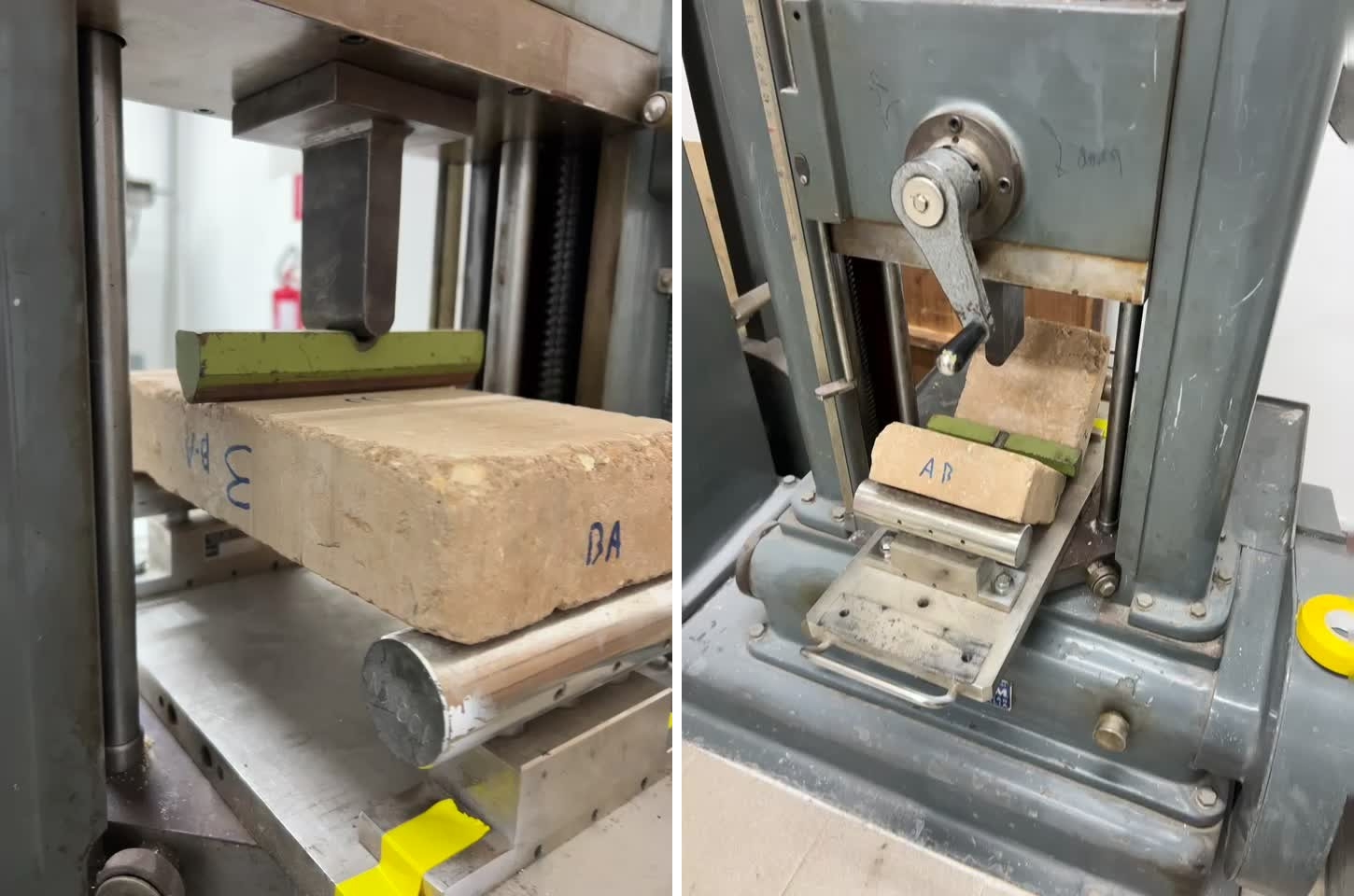
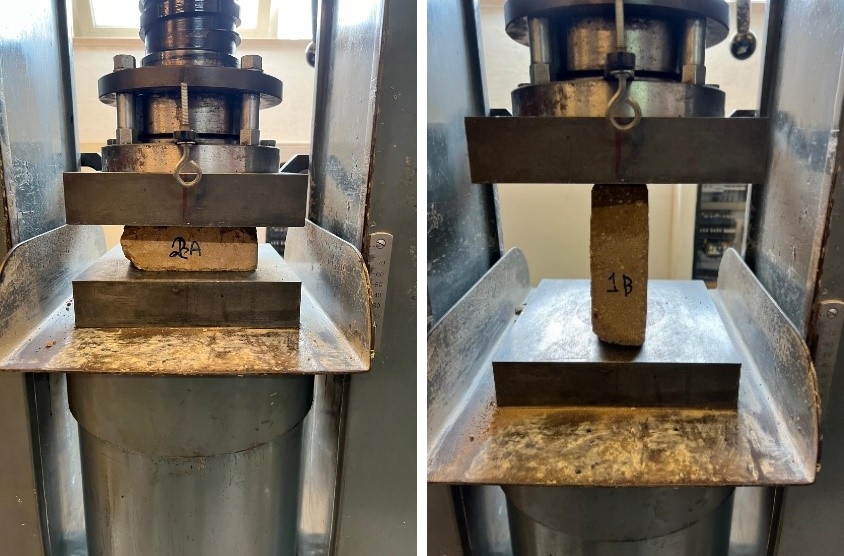
Three-point bending and compression tests were conducted to obtain preliminary mechanical property values for the material and to evaluate its suitability for structural applications. The flexural tests were performed by using a universal displacement-controlled machine with a maximum load capacity of 5 kN (with a sensitivity of 0.02 kN) and a displacement rate of 1.5 mm/min. Whereas the compression tests have been performed using a universal load-controlled machine with a load capacity of 100 kN. Two halves obtained from the flexural tests were used for the compressive tests. Notably, the compression strength was determined on two different planes; in the first case, the load was applied normally to the bed face (Figure 10.a), and in the second case, perpendicularly to the face (F) (Figure 10 b). A total of three tests on each face was performed.
Results and Discussion
Results of water absorption due to capillarity
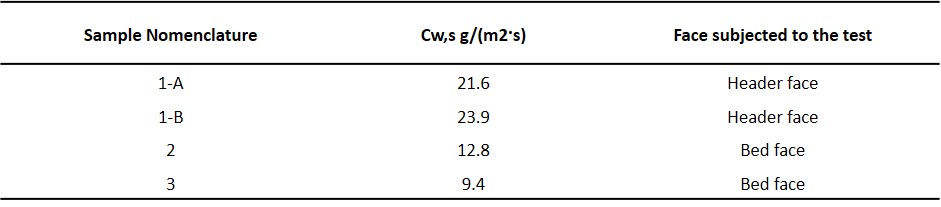
Table 4 summarises the results of the tests. The coefficient of water absorption due to capillarity (Cw,s) quantifies the rate at which a porous material (like earthen bricks) absorbs water through capillary action, mainly when one of the surfaces is exposed to water. This parameter is very important because it indirectly reflects the earthen brick’s pore structure, clay content, compaction level, and degree of stabilisation. Notably, the lower the value of Cw,s highlights the improvement in the water absorption resistance, thus enhancing the durability. These characteristics and performance are essential for the long-term performance of earthen brick in humid or variable working conditions.
Furthermore, capillary absorption behaviour is influenced by the orientation of the tested surface. It can be observed that the mean value of the coefficient Cw,s measured orthogonally to the bed face is nearly twice that measured orthogonally to the header face. This difference likely results from samples 1-A and 1-B being fragments of the same sample, which arrived broken. Consequently, one edge of the sample exposed to water is the inner side instead of the header face, which would have been exposed if the sample had arrived intact.
The capillary absorption coefficients obtained in this study (Cw,s ≈ 9–24 g/(m²·s)) fall within the broad range reported for cement-stabilised compressed earth blocks, although the highest values measured on samples 1-A and 1-B are closer to the upper bound typically associated with lightly stabilised or partially stabilised earthen materials. Published data show that stabilised CEB generally exhibit capillary absorption coefficients between approximately 1 and 12 g/(m²·s), depending on soil composition, stabiliser content, and the presence of water-repellent additives, while unfired earth materials may display substantially higher values. The capillary absorption values obtained from the results of this study are higher compared to the lower bound of the reported range for stabilised compressed earth blocks, especially for samples 1-A and 1-B. These values can be explained by the fact that sample 1 was fractured during transportation, which could have exposed the inner surfaces of the sample to water absorption. Overall, the results indicate that the investigated bricks exhibit a capillary behaviour consistent with earthen products of similar stabilisation level and compaction characteristics[51-53].
Table 4. Capillary absorption coefficient.
Ultrasonic test (UT) results
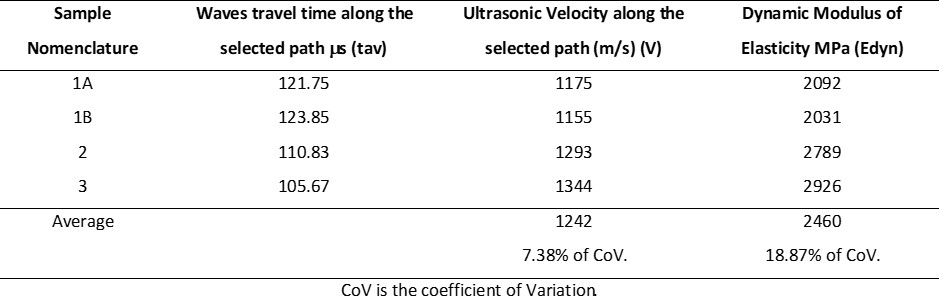
Table 5 and Table 6 present the ultrasonic travel time, wave velocity, and the corresponding dynamic modulus of elasticity measured along the Width (W) and Height (H) propagation paths, respectively. For the Height path (see Table 5), the average ultrasonic velocity is approximately 1554 m/s, with individual values ranging from 1459 to 1648 m/s.
Notably, dynamic modulus values obtained between 3227-4401 MPa, which is equivalent to an average of 3834 MPa and a coefficient of variation of 13.17%. However, the low variation in ultrasonic velocity, which corresponds to a coefficient of variation of 4.97%, implies a stable wave propagation along this shorter distance.
In contrast, the width direction (Table 6) exhibits higher travel times and lower ultrasonic wave velocities, with values between 1155 and 1344 m/s and averaging 1242 m/s. Consequently, the dynamic modulus of elasticity as determined along this profile line is significantly lower, with values between 2031 and 2926 MPa and an average value around 2460 MPa, and a higher %CoV, at 18.87%.
A larger scatter in both velocity data and dynamic modulus data along different paths can be attributed to several factors, including the manufacturing process, which may cause non-isotropic behaviour, but not necessarily to any internal defect or strong material heterogeneity.
Overall, the results seem to demonstrate the effects of testing directionality, though it is proposed that further testing is necessary to confirm these tendencies.
Table 5. UT results for the path Bed (B).
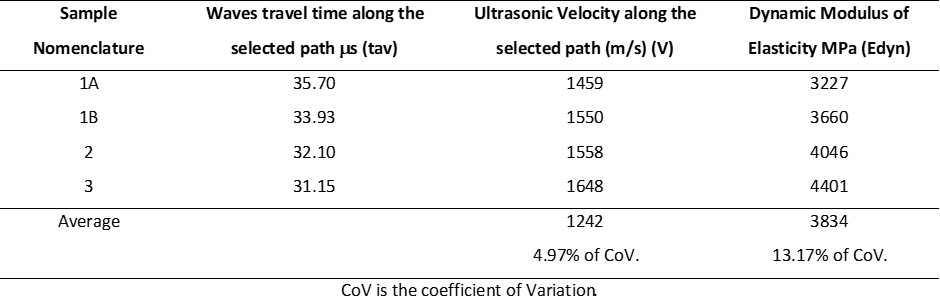
Table 6. UT results for the path Face (F).
Rebound Hammer (RH) test results
Table 7 presents the Rebound Number (RN) values measured on the tested faces of each sample. The results from the rebound hammer test (RH), as per Table 7, confirm the directional variability observed in the material.
Table 7. RH test results.
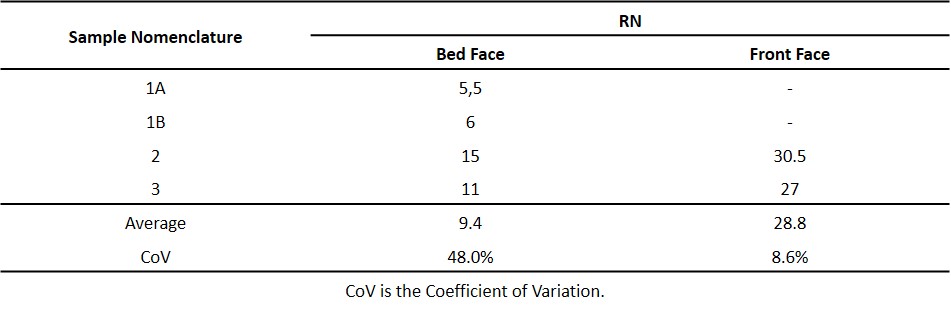
Notably, the Rebound Number (RN) is significantly influenced by the stiffness of the section in the test direction: measurements on Bed Faces, which correspond to the lower sides, range from 5.5 to 15. In contrast, higher RN values, ranging from 27 to 30.5, were recorded for tests performed on Front Faces. These differences may be ascribable to the greater stiffness, as well as to the regular and smooth surface of the brick section in that direction. Moreover, a larger scatter in the RN results was observed on bed faces (CoV =48%), compared to front faces (CoV = 8.6%), which is likely due to the irregular and uneven surface of the bed faces.
Mechanical properties
Flexural test results
Table 8 represents the flexural strength of the tested cement-stabilised unfired earth bricks. These values are relatively low when compared with traditional fired clay bricks, which typically exhibit flexural strength values between 1 and 3 MPa: [54].
The variation among the samples (approximately 42%) suggests a degree of inconsistency in the production process or in the brick composition. This variability may be attributed to factors such as non-uniform distribution of cement within the mixture or differences in the compaction process.
Table 8. Flexural strength of the cement-stabilised unfired brick.

Compression test
As expected, the compressive strength varies significantly with the load direction relative to the brick faces (Table 9), ranging from 1.7 MPa to 8.6 MPa.
Compressive tests were conducted on both the bed (B) face and the front (F) face in order to assess the potential anisotropy of the bricks resulting from the moulding and compaction process. During brick manufacturing, the direction of compaction and the resulting particle orientation can lead to direction-dependent mechanical properties. By testing the specimens in both directions, the anisotropy of the material can be analysed, and the best direction of loading can be established with regard to masonry applications. The experimental results confirmed that the compressive strength depends on the direction of the loading, as expected with most hand-compacted earthen materials.
Table 9. A compression test was performed on bricks.
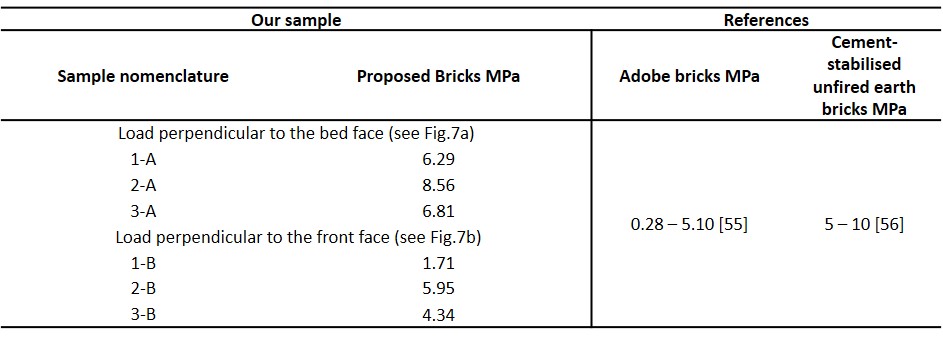
Samples tested on the bed face generally exhibit higher compressive strength than those tested on the front face. This may be due to differences in the compaction process during production, particle orientation within the material, and possible variations in exposure or treatment of the different faces. Anyway, scattering in the homogeneous test is consistent with a hand-made product, as it is.
Our samples show variable performance, with some falling within the typical range of unfired earth bricks (1B, 3) and others exceeding expectations (2A, 1A), approaching the performance of high-quality stabilised compressed earth blocks. Samples 2A and 1A have demonstrated exceptional performance, indicating strong potential for construction use.
The graph (Figure 11) compares the compressive strength of cement-stabilised unfired earth bricks obtained in this study with values reported by scholars.
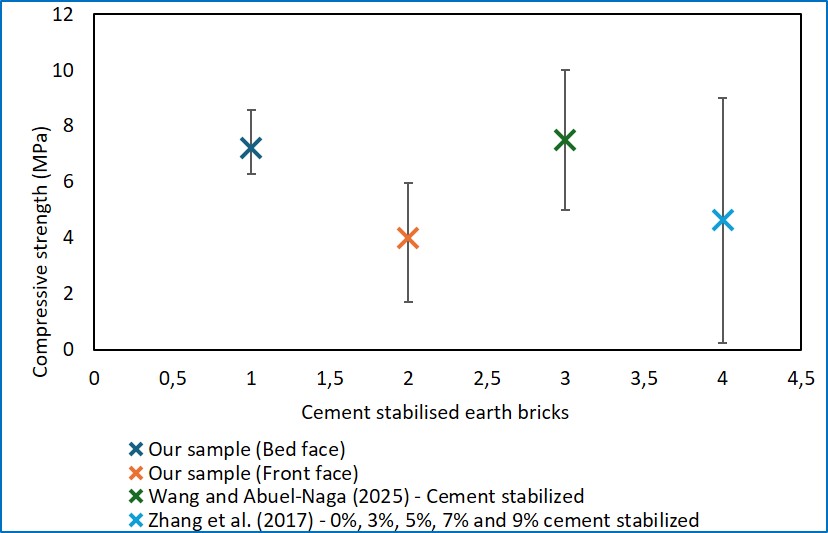
Our experimental results show that the bed face specimens exhibit a higher average compressive strength (about 7.2 MPa) with relatively lower variability, while front face specimens show a lower mean strength (about 4.0 MPa) and greater scatter. These findings suggest that brick orientation and internal materials composition significantly influence compressive strength, potentially due to anisotropy introduced during moulding and compaction.
Furthermore, comparison of compressive strength values with those available in the literature reveals that the values obtained on bed face samples are comparable to those reported by Wang and Abul-Naga (2025) [56] for cement-stabilised unfired earth bricks, which exhibit a mean strength of approximately 7.5 MPa, with a wider range of variation. In contrast, the results reported by Zhang et al. (2017) [29], for cement (0%, 3%, 5%, 7%, and 9%) -stabilised unfired earth bricks displayed values ranging from about 0.2 MPa to 9 MPa, highlighting the strong influence on compressive strength for various cement content and bulk densities combinations.
Overall, the graph demonstrates that the cement-stabilised unfired earth bricks analysed in this study, particularly when tested on the bed face, achieve compressive strengths comparable to or exceeding those reported in earlier studies.
Thermal property
The TC values of a total of four samples were evaluated with TAURUS TCA (the heat flow meter instrument). Table 10 presents the thermal conductivity (TC) values of the cement-stabilised unfired earth bricks measured at different temperatures. The results clearly demonstrate a gradual increase in TC value with increasing sample temperature, from 0.435 W/m·K at 10 °C to 0.446 W/m·K at 20 °C and 0.462 W/m·K at 30 °C. The tests showed low coefficients of variation ranging from 2.38% to 4.51%, indicating good repeatability and reliability of the measurements across all temperature levels.
Table 10. Thermal conductivity

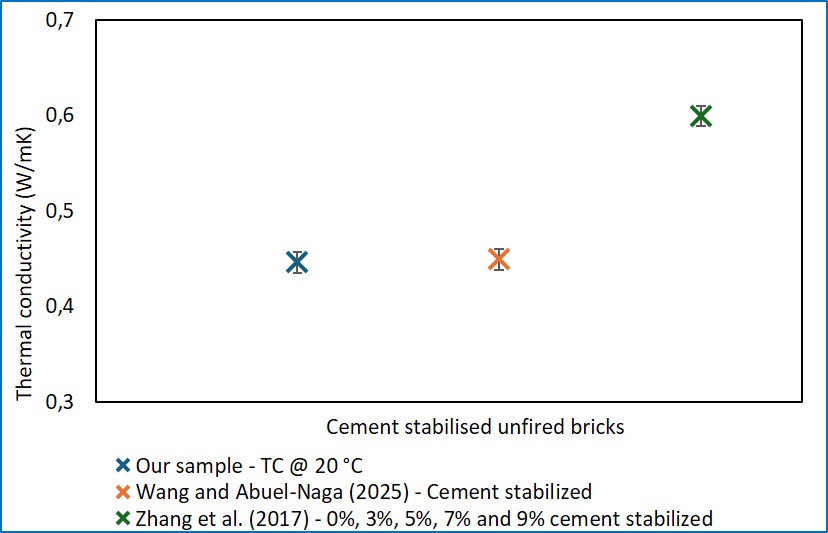
Figure 12 compares thermal conductivity values obtained in the present study at 20 °C with those reported for other cement-stabilised unfired earth bricks in the literature.
The TC (20°C) value of our study (about 0.44 W/mK) is comparable to that obtained by Wang and Abuel-Naga [56] for cement-stabilised unfired earth bricks. In contrast, higher thermal conductivity values reported by Zhang et al. [29], particularly at increasing cement contents (0%, 3%, 5%, 7%, and 9%), directly affect and increase the TC values, from 0.25 W/mK to 0.95 W/mK. Overall, results confirm that the thermal performance of the present sample falls within the expected range for cement-stabilised unfired earth bricks and is consistent with previously published experimental data. Notably, the measured thermal conductivity values are in the expected range for earth-based masonry units, confirming their suitability for building applications while offering only moderate, not insulation-grade, thermal performance.
It is worth noting that the number of samples used in the present experimental campaign is rather limited. Consequently, the results reported in the present study must be considered as preliminary. These initial results aim to show the feasibility of the proposed approach. Moreover, in order to overcome the aforementioned limitation of the present study and to increase the statistical confidence of the reported results, additional samples will be used in the future to carry out further experimental campaigns.
Conclusion
This study examines the physical, mechanical, and thermal properties of cement-stabilised unfired earth bricks made with soil from Sidi Amor, Tunisia. The research responds to the growing need for sustainable masonry materials that use less energy and still meet engineering standards for buildings.
The results show that the addition of a low cement content (3%) improves mechanical performance while still maintaining relatively low cement usage compared with conventional cement-based materials. The measured dry densities, ranging between 1687 and 1853 kg/m³, indicate that these bricks are as compact as lightly stabilised earthen materials.
Material homogeneity and mechanical quality of the cement-stabilised unfired earth brick have been analysed using non-destructive tests.
Ultrasonic pulse-velocity measurements have demonstrated satisfactory internal continuity, with higher velocities observed along the bed direction. Whereas rebound hammer tests indicated moderate surface hardness, particularly on the front faces of the bricks. These results highlight the inherent anisotropy of hand-made unfired bricks and the influence of compaction direction on material performance.
The flexural strengths of these bricks were found to be between 0.66 and 0.98 MPa; notably, these values typically fall in the range of low-strength unfired earth materials. The number of tested samples was very low; therefore, it has already been scheduled to manufacture additional samples and repeat the tests.
Compressive strength was evaluated in two directions, perpendicular to the bed face and perpendicular to the header face. The compressive strengths ranged from 1.7 to 8.6 MPa, depending on loading direction, resulting in more consistent values with those reported in the literature in the direction perpendicular to the bed face. The tests have also confirmed that the investigated bricks are suitable for low-rise construction and masonry applications, particularly where moderate load-bearing capacity is required.
Interestingly, these tested bricks have demonstrated comparatively lower thermal conductivity values, making them suitable for use as building insulation materials.
The TC values found to be 0.435, 0.446, and 0.462 W/m·K at 10 °C, 20 °C, and 30 °C, respectively. The TC results align with the values already available in the published literature; therefore, it confirms that the cement-stabilised unfired earth bricks can contribute positively to the thermal performance of building envelopes, particularly when combined with appropriate design strategies, such as integrated (structural and thermal) application or retrofitting/upgrading.
The results of this study demonstrate that cement-stabilised unfired earth bricks manufactured from local Tunisian soil constitute a viable and sustainable alternative to conventional masonry units for low-rise and non-load-bearing construction, as well as for integrated (structural and thermal) applications. Further research is recommended to investigate long-term durability, moisture–thermal coupling behaviour, optimisation of cement content, and scale-up production methods to improve the reliability and applicability of this material in sustainable construction.
Due to the limited number of samples, the results must be considered as preliminary and are mainly intended to prove the feasibility of the proposed approach. Further experiments with additional samples are planned to improve the statistical reliability of the results. The work will also include comparative testing with unstabilised and stabilised mixtures.
Author Contributions
Arnas Majumder: Conceptualisation, Data curation, Formal analysis, Investigation, Methodology, Validation, Visualisation, Writing – original draft, Writing – review & editing. Monica Valdes: Conceptualisation, Data curation, Formal analysis, Investigation, Methodology, Validation, Visualisation, Writing – original draft, Writing – review & editing. Mariangela Albano: Funding acquisition, Methodology, Resources, Writing – review & editing. Patrizia Serra: Conceptualisation, Formal analysis, Methodology, Validation, Writing – review & editing. Filippo Schintu: Data curation, Investigation, Methodology, Writing – review & editing. Flavio Stochino: Conceptualisation, Data curation, Funding acquisition, Investigation, Methodology, Project administration, Resources, Supervision, Validation, Visualisation, Writing – original draft, Writing – review & editing. All authors have read and agreed to the published version of the manuscript.
Conflict of Interest
The authors declare no conflict of interest.
Funding
This work was supported by the Project MED-GREEN: Examining Models of Local Livelihood, Green Building, and Sustainable Mobility in Mediterranean Areas through Discursive Negotiation and Active Citizenship (RICMIUR_CTC_2023, CUP F25F21002720001).
Data Availability Statement
The supporting data is available on request from the corresponding author.
References